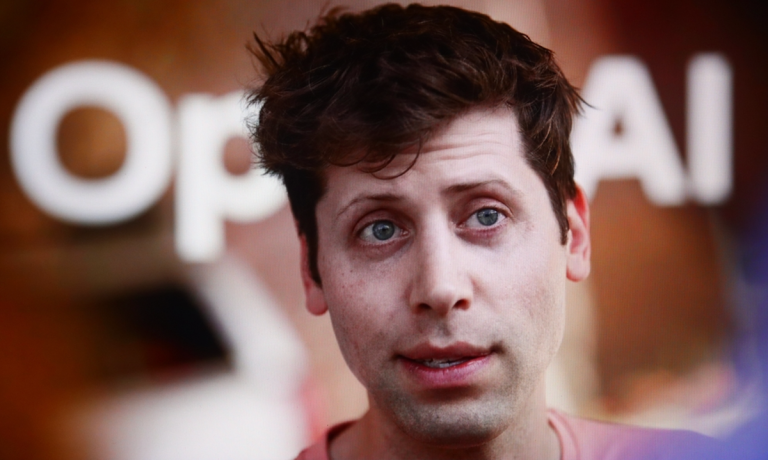
In a letter sent last week and posted to the committee’s website Monday (May 11), lawmakers requested information from Altman about potential conflicts of interest and the governance practices at the artificial intelligence (AI) startup.
The letter was flagged in a report by the Wall Street Journal (WSJ), which had previously covered Altman’s efforts to get OpenAI to back companies where he held investments. Altman is also contending with a lawsuit from Elon Musk over the company’s shift from a non-profit to for-profit entity.
“The Committee aims to ensure that funds donated for charitable purposes are not diverted for unintended uses, such as artificially increasing the market value of other companies in which an executive or board member may hold an interest,” Rep. James Comer, R-Ky., the committee’s chairman, wrote in the letter.
The letter also touches on Altman’s short-lived ouster as CEO in 2023, noting that OpenAI’s board had initially requested he step down because of the “little they knew about his personal investments and whether they posed potential conflicts” and because a lack of start-up disclosures “made it impossible to understand how Altman might personally benefit from deals pursued on behalf of OpenAI.
According to the WSJ, OpenAI board chairman Bret Taylor defended Altman while testifying during a Monday court hearing, saying that the CEO had been “forthright” and “proactive and transparent” about his ties to other companies.
Advertisement: Scroll to Continue
Taylor was not part of the board that removed Altman, and was named chairman of a reconfigured board upon Altman’s return.
The WSJ report added that Altman is also facing pressure from the attorneys general of several Republican-led states, who have asked SEC Chairman Paul Atkins to investigate potential conflicts ahead of OpenAI’s planned initial public offering (IPO).
In a letter seen by the news outlet, they write that Altman “has a history of self-dealing and serious conflicts of interest that have created significant risk for the company.”
As Altman has no direct equity in the startup, “his personal financial interests have only limited alignment with OpenAI’s financial performance,” the letter adds.
The issue is playing out as Altman is set to begin testifying in the trial brought by Musk, who accuses OpenAI of diverging from its non-profit roots after Musk gave the company $38 million with the understanding that it would retain its charitable mission.
OpenAI has said the suit is driven by commercial motives — Musk owns xAI, a rival AI startup — and is part of “an ongoing pattern of harassment.”
“We should actually care — very much — about the Elon Musk vs. OpenAI drama because it’s not just another billionaire feud,” Aron Solomon, chief strategy officer at Amplify, said in an interview with PYMNTS last year. “This made-for-TV drama matters because AI is shaping everything — our jobs, our news, our social interactions, and even national security. If it’s controlled by a few corporations chasing a profit, that’s a problem.”