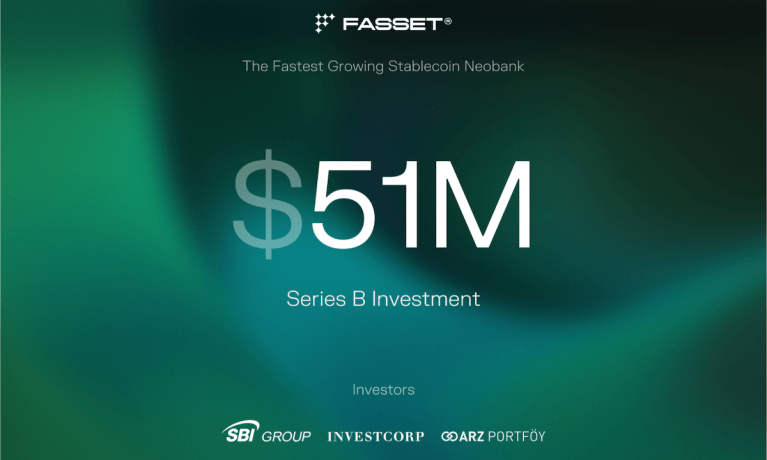
The company said its Series B round, announced Thursday (May 14), will help it continue its work of serving customers in overlooked markets.
These are people who are “locked out of opportunity because of where they were born, what passport they hold or how underdeveloped their local financial infrastructure may be,” Fasset founder and CEO Mohammad Raafi Hossain wrote on the company blog.
With the new funding, Fasset hopes to build on its layer of financial infrastructure that connects financial institutions, telecoms, payment companies, and on/off-ramp partners “across the Morocco-to-Malaysia corridor and beyond,” the blog post continued.
The goal, Hossain added, is to develop a system where “stablecoins and tokenized real-world assets become part of everyday financial life for everyone, everywhere” and where “someone in an emerging market can access global financial tools with the same ease as someone sitting in New York or Singapore.”
Founded in 2019, Fasset is based in Los Angeles and is an Islamic digital bank, offering Shariah-compliant digital investing, payments and savings services to more than 2 million customers in 125 countries.
Advertisement: Scroll to Continue
PYMNTS wrote last month about the rising popularity of stablecoins in emerging markets, and the issues that result as they move into the mainstream.
“The appeal is straightforward: 24/7 transfer availability, transactions settled in minutes, and an effective ‘digital dollar’ hedge against local currency volatility,” the report said.
Nigerians reportedly used stablecoins for roughly $3 billion worth of less-than-$1 million transfers in the first quarter of 2024 alone, underlining how retail use of the tokens has now dwarfed institutional speculation.
In Latin America, stablecoins are becoming part of small-ticket merchant checkout and peer-to-peer remittances, while BitPay said they are being used for bill payments and gift cards that connect directly to retail and food delivery networks.
“Yet the more stablecoins resemble mainstream payments, the more they inherit mainstream risks,” PYMNTS added.
The watchdog group Financial Action Task Force (FATF) has cautioned that inconsistent compliance among wallet providers and exchanges could cause stablecoins to become a channel for illicit finance. Its standards mandate know your customer (KYC) checks, sanctions screening and the so-called Travel Rule, which requires that originator and beneficiary information accompany transactions the same as in the traditional system.
“Without those guardrails, scaling stablecoins as everyday spending money in emerging markets could introduce vulnerabilities regulators and payment firms are keen to avoid,” PYMNTS added.