For years, retail’s artificial intelligence (AI) ambitions revolved around making search smarter. Now, Amazon and Walmart—two of the world’s biggest retailers—are placing very different bets on what comes next. The split says a lot about where commerce may actually be headed.
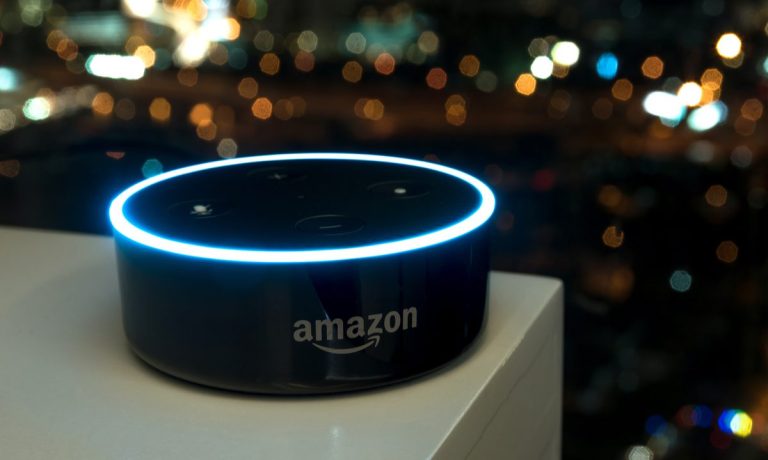
On Wednesday (May 13), Amazon made its move: the company announced it was sunsetting its standalone Rufus AI shopping chatbot and replacing it with Alexa for Shopping, a new agentic AI tool available U.S. customers on the Amazon Shopping app, website and Echo Show devices.
The decision skips past the chatbot moment many in retail anticipated: the gradual migration from keyword search to conversational commerce, eventually giving way to agentic, autonomous in-browser shopping.
It suggests a bolder thesis: rather than treating AI as a layer on top of eCommerce search, Amazon is betting that voice can become the operating system for shopping itself.
See also: Commerce Finds Its Voice
Amazon’s Return to Voice
When Amazon launched Alexa in 2014, the big idea was simple. People would talk to machines the way they talk to each other. The reality played out differently, but advances in AI capabilities are increasingly helping voice-based interfaces intersect with the upper range of user expectations.
Advertisement: Scroll to Continue
In a recent analysis, PYMNTS CEO Karen Webster argued that voice is poised to become the connective tissue between consumers and agentic commerce systems. “Voice will finally pull agentic commerce onto the mobile phone by turning complex, desktop-only ‘go do this for me’ prompts into natural, spoken conversations that consumers can have anywhere,” Webster wrote, framing voice not as an incremental feature but as an unlock for execution at scale.
After all, Amazon CEO Andy Jassy said during an April 29 earnings call that customers using Alexa+ are talking to the voice assistant twice as much, completing purchases on devices three times more, streaming music 25% more and using smart home functions 50% more.
New PYMNTS Intelligence research in the April 2026 Payments Innovation Tracker® Series, a collaboration with Paymentology, finds 48% of consumers are at least somewhat interested in artificial intelligence agents doing their grocery shopping or planning their meals for them, while the same share would let an autonomous assistant manage their subscriptions, and 44% are somewhat interested in using the tech for buying gifts.
A shopper asking Alexa to “restock my vitamins,” “find a cheaper alternative to this brand,” or “buy the same groceries as last week but healthier” creates a fundamentally different behavioral model than traditional eCommerce navigation. The consumer is delegating intent rather than conducting a search. Voice accelerates this dynamic because spoken interactions tend to be more contextual and habitual than typed ones. Consumers speak differently than they search. They reveal urgency, ambiguity, emotion and preference in ways that keyword queries rarely capture.
An AI shopping agent becomes most truly useful when it understands preferences over time: dietary habits, household routines, brand loyalties, replenishment cycles, price sensitivity and contextual behaviors. The more persistent the memory layer, the more natural the commerce experience becomes.
Amazon possesses an enormous structural advantage here. Alexa sits inside homes, kitchens, living rooms and daily routines. Combined with Amazon’s purchase history, Prime ecosystem data and logistics infrastructure, the company can build a retail memory graph that few competitors can replicate at scale.
Read more: The AI Coding Boom Is Breaking CFOs’ Enterprise Budgeting Cycles
Walmart’s AI Reorganization Reflects a Different Priority
At the same time and across the retail landscape, recent news from Walmart, by contrast, shows the retail giant appears to be focusing less on AI’s interface transformation and more on its role in driving organizational coherence.
The company is undertaking its own restructuring around AI, eliminating or relocating roughly 1,000 corporate technology roles while consolidating product, design and engineering teams. The move reflects a very different philosophy: less consumer-facing experimentation, more operational centralization. Walmart appears to be optimizing for execution efficiency and internal AI alignment, while Amazon is doubling down on interface transformation.
For Walmart, the most immediate AI value may not come from conversational shopping experiences. It may come from demand forecasting, inventory management, workforce productivity, fulfillment optimization and enterprise-wide decision systems.
Both retailer strategies acknowledge the same underlying reality: AI is no longer an experimental feature in retail. It is becoming the architecture around which modern commerce is organized. The chatbot era introduced the technology. The agentic era may determine who controls the customer relationship once AI starts making decisions alongside consumers, or eventually for them.